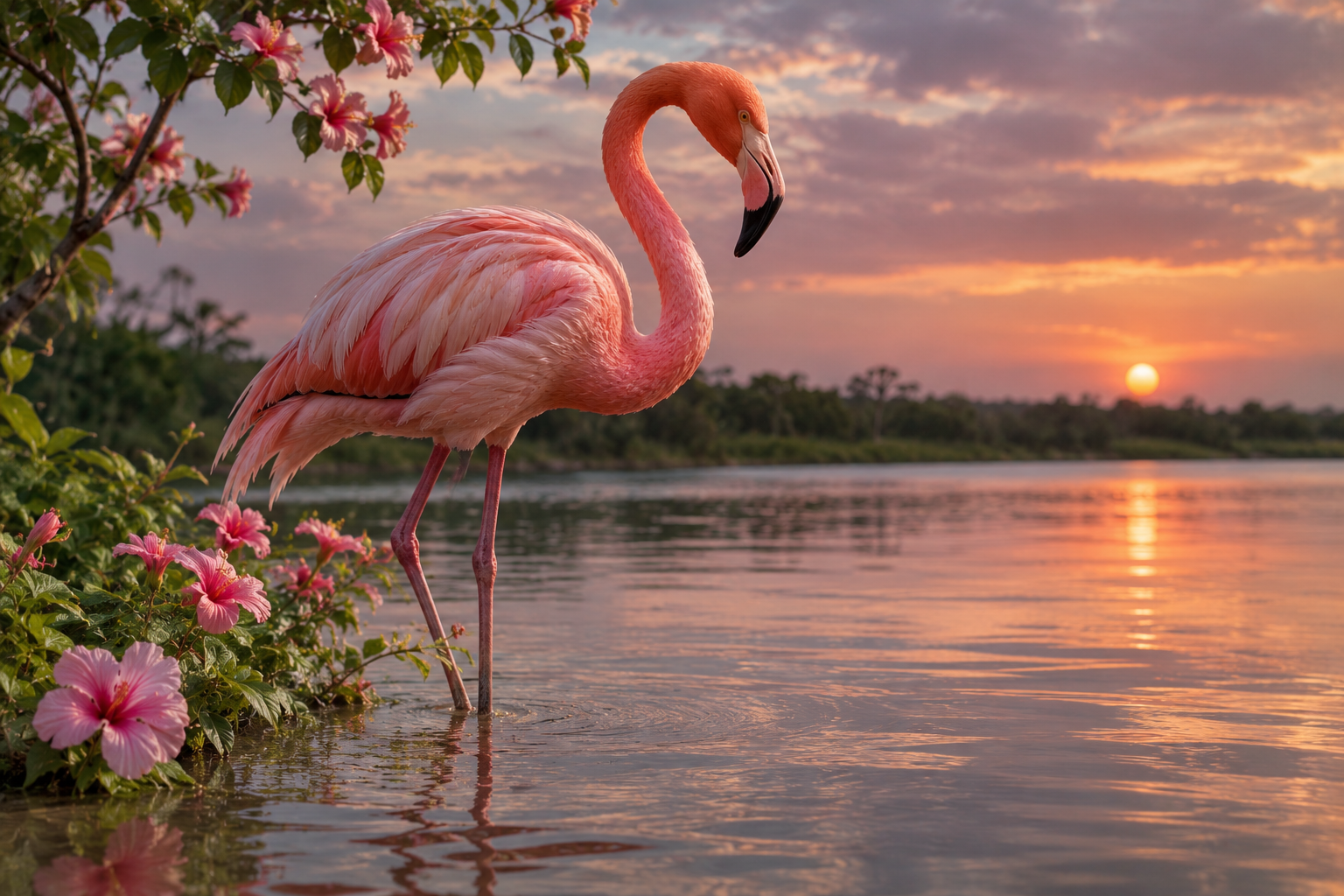
Elegance at Sunset
The extraordinary biology of nature’s most deceptively glamorous bird.
There is something deliciously contradictory about a creature that looks as though it belongs on the grounds of a Palm Beach estate but is capable of raising its offspring in one of the most inhospitable landscapes on earth.
In northern Tanzania, beneath the formidable silhouette of an active volcano, lies Lake Natron, a fiercely alkaline lake where lesser flamingos establish enormous breeding colonies. The very conditions that discourage many predators provide a degree of protection for their offspring. What appears to be a landscape of almost biblical hostility becomes a nursery.
Apparently, pink is not a color reserved for the delicate.
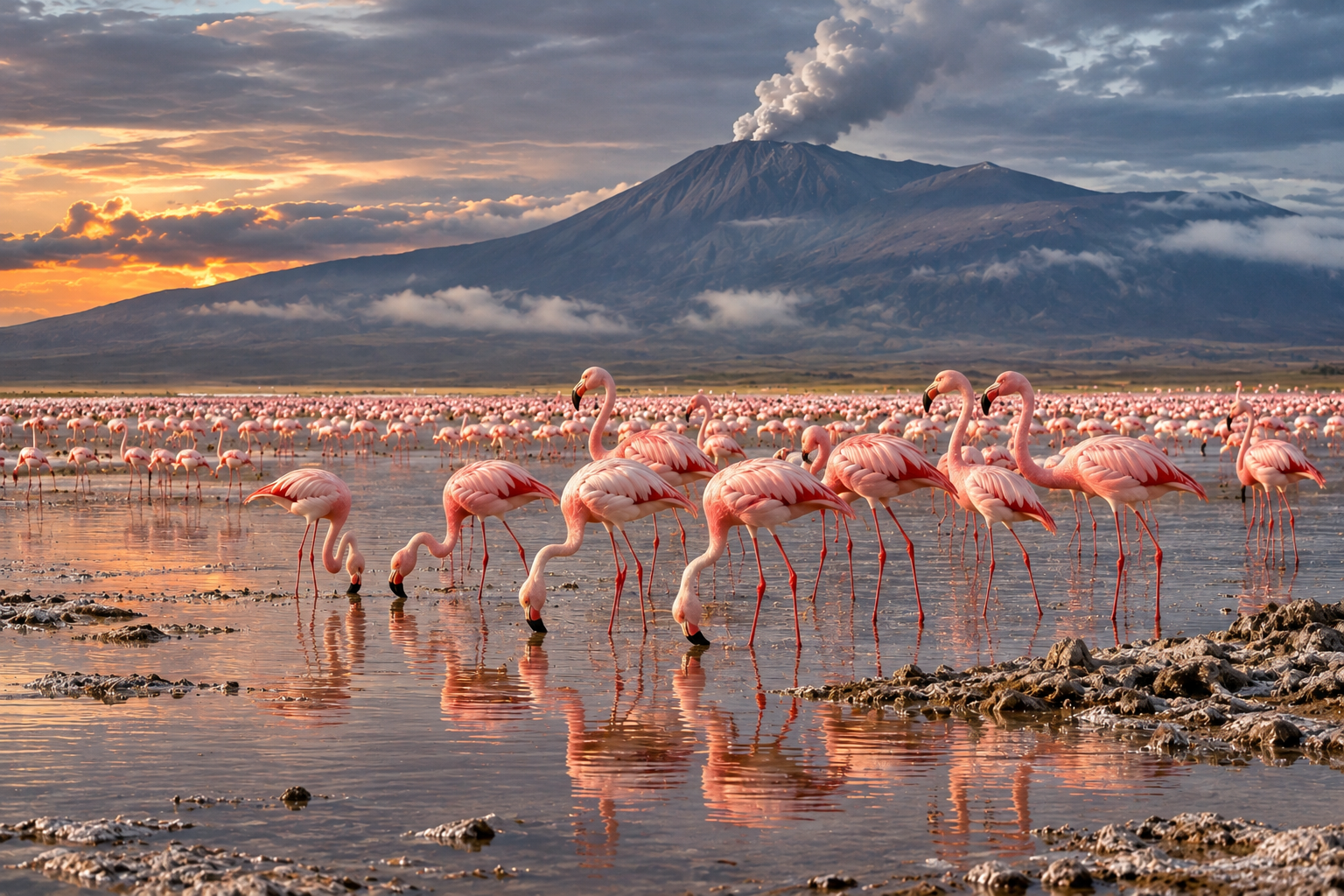
Lake Natron, Tanzania — Beauty in an Unforgiving Landscape.
THE WORLD'S OLDEST BEAUTY ROUTINE
Long before the invention of the Parisian cosmetic counter, nature had perfected the art of rouge.
Greater flamingos possess a gland near the base of their tails that produces secretions containing carotenoid pigments. During preening, both males and females distribute these natural cosmetics over their plumage, intensifying their coloration.
In a fascinating study published in Ecology and Evolution in 2021, scientists demonstrated that feathers exposed to sunlight gradually lost their reddish coloration without the continued application of these pigments. A magnificent complexion, it turns out, requires maintenance even in the animal kingdom.
There is also a romantic incentive. More intense coloration can serve as a signal during courtship.
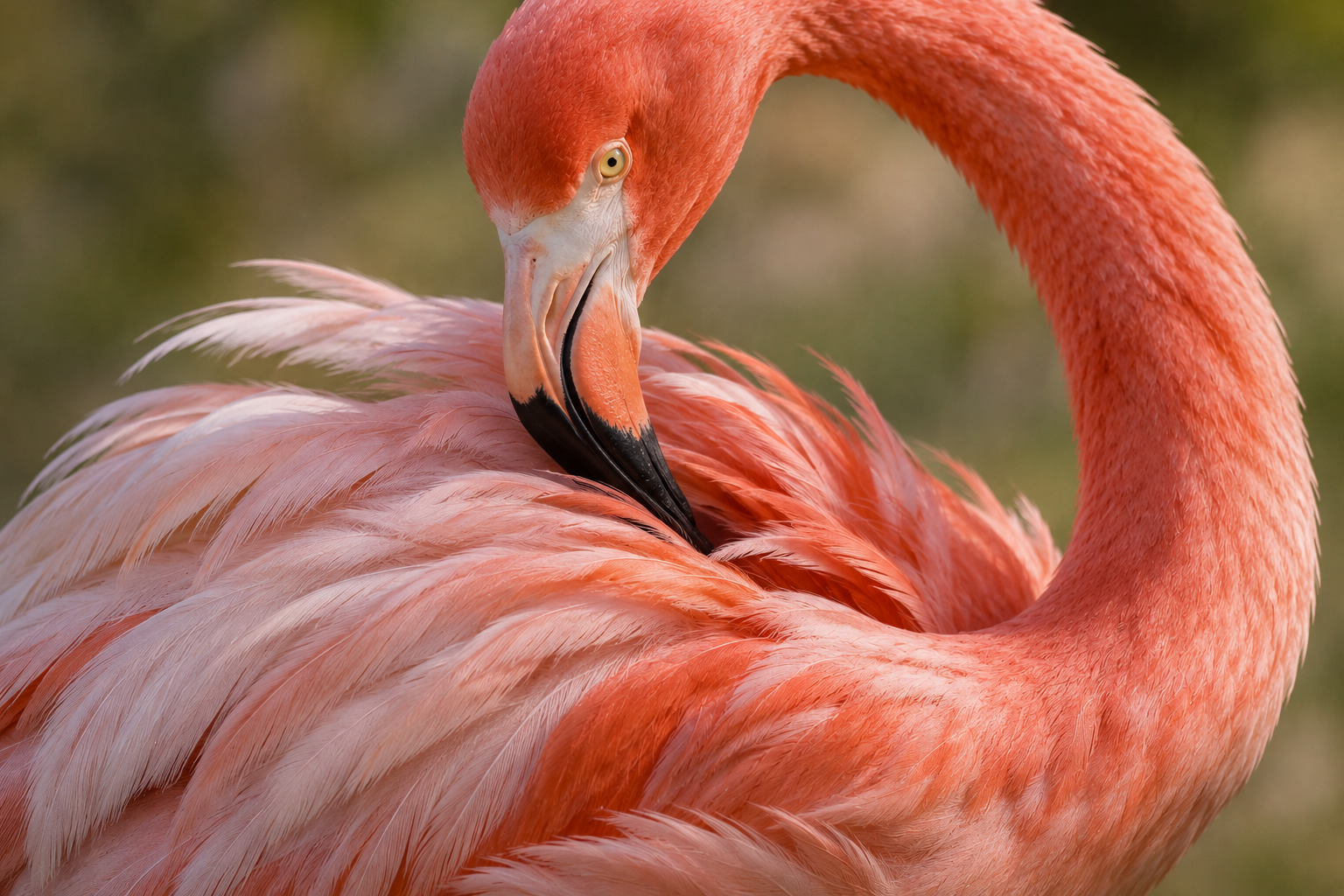
Nature’s Own Rouge — The Art of Being Pink.
A PREDATOR IN COUTURE
Perhaps the most astonishing revelation about flamingos came in 2025, when researchers published a study in the Proceedings of the National Academy of Sciences examining the extraordinary mechanics of flamingo feeding.
Using high-speed cameras, experimental models and computer simulations, scientists discovered that these birds create miniature underwater vortices to capture their prey.
Their remarkable feet generate swirling currents that dislodge and concentrate small aquatic creatures. Rapid movements of their heads produce disturbances beneath the surface, while the movements of their bills generate currents that help direct prey toward them.
The seemingly leisurely bird strolling through shallow water is actually manipulating the physics of its surroundings to obtain dinner.
It is an extraordinary marriage of beauty, engineering and predatory efficiency.
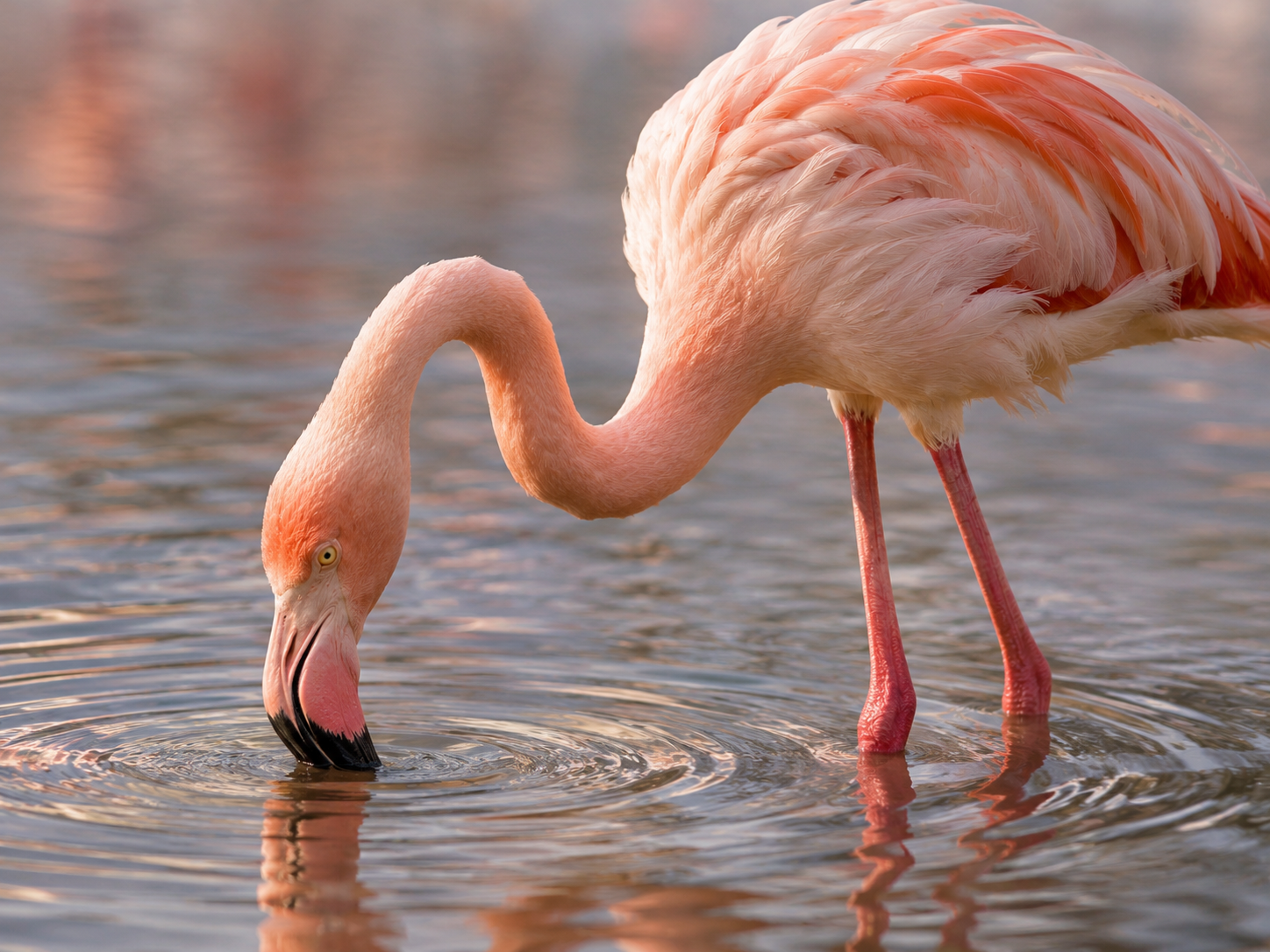
The Physics of Survival — Nature’s Remarkable Ingenuity.
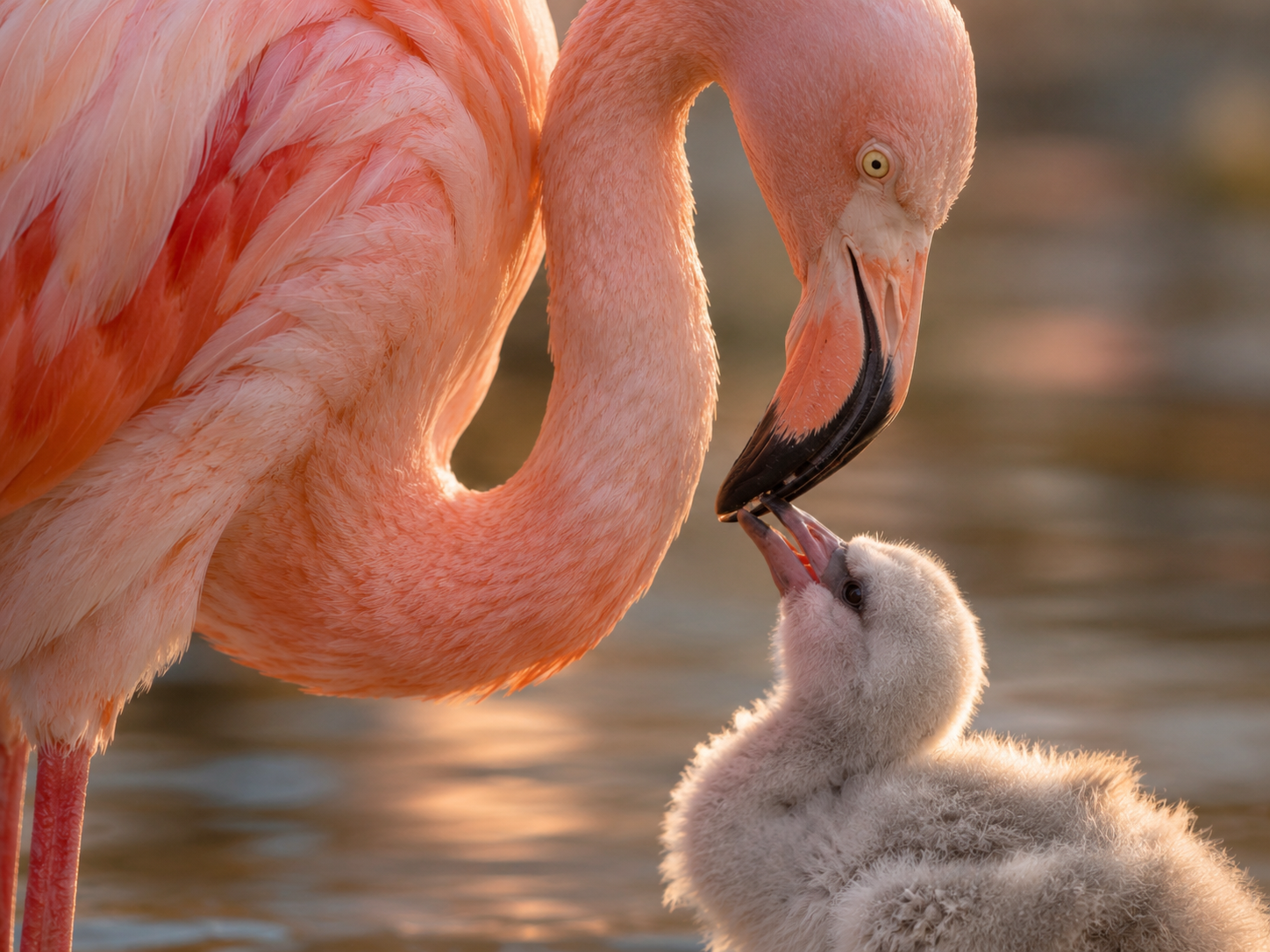
The Tenderness of Strength.
THE SACRIFICES OF PARENTHOOD
Flamingos possess another remarkable biological adaptation: both parents produce a nourishing secretion commonly called crop milk.
Rich in fat and protein, this substance sustains their offspring before the young birds develop the specialized feeding apparatus necessary to nourish themselves independently.
The transformation from a downy, grayish chick into one of the most visually arresting creatures in the natural world takes time. Its eventual pink coloration is acquired through the pigments in its diet.
There is nothing particularly effortless about becoming a flamingo.
THE ART OF RESILIENCE
The next time you encounter a flamingo, consider what lies beneath that magnificent exterior: a creature capable of enduring hostile environments, manipulating water with remarkable precision, manufacturing its own cosmetics and nourishing its offspring through extraordinary biological adaptations.
Nature has never required beauty and strength to be mutually exclusive.
Perhaps that is precisely what makes the flamingo so irresistible.
The Camellia Stiletto™
Elegance, sharpened by wit.